
A slick patch of ice doesn’t look like much—until your feet go out from under you. One second you’re walking into a store, an apartment building, or an office in Durango. The next, you’re on the ground, stunned, in pain, and wondering how a simple errand turned into an emergency room visit.
Slip-and-fall accidents on ice are common in Colorado, especially during winter months and shoulder seasons when snow melts during the day and refreezes overnight. But common doesn’t mean harmless. These falls often result in broken wrists, fractured hips, herniated discs, head injuries, or lingering back and knee problems that disrupt work, family life, and financial stability.
If you’ve been injured in a slip and fall on ice in Colorado, one of the first questions that usually comes up is simple—but loaded:
Is anyone legally responsible for this?
The answer depends on where the fall happened, who controlled the property, what they knew (or should have known), and how Colorado’s premises liability laws apply to icy conditions. This article breaks that down in clear, human terms, with a focus on premises liability for icy sidewalks and walkways in Colorado, including how these rules often play out in Durango and La Plata County.
Why Slip-and-Fall on Ice Cases Are So Complicated in Colorado
Colorado winters are part of life here. Property owners aren’t expected to eliminate every trace of snow or ice the moment it falls. At the same time, visitors aren’t expected to accept serious injuries as “just part of winter.”
Colorado law tries to balance those realities. That balance is where many slip-and-fall cases become complicated.
Unlike car accidents, where fault is often clearer, ice-related falls live in a gray area. Liability hinges on reasonableness—what a property owner reasonably should have done under the circumstances, and what a visitor reasonably should have anticipated.
Understanding that framework is key to understanding whether a property owner may be legally liable.
Colorado Premises Liability Law: The Foundation
Slip-and-fall cases in Colorado fall under the Colorado Premises Liability Act (C.R.S. § 13-21-115). This law governs when landowners and property occupiers can be held responsible for injuries occurring on their property.
Legal Status Matters More Than You Think
Under Colorado law, injured visitors fall into one of three categories:
- Invitees
- Licensees
- Trespassers
Most slip-and-fall on ice claims involve invitees or licensees.
Invitees (Highest Duty of Care)
You’re typically an invitee if you were on the property for a business or mutual benefit purpose. Examples include:
- Customers at a store
- Tenants or guests in an apartment complex
- Clients entering an office building
- Patrons at restaurants, bars, or hotels
Property owners owe invitees the highest duty of care, which includes taking reasonable steps to discover and fix dangerous conditions—like icy walkways.
Licensees
You’re generally a licensee if you were on the property for social reasons, such as visiting a friend’s home. Owners must warn licensees of known dangers that aren’t obvious.
Trespassers
Property owners owe very limited duties to trespassers. Slip-and-fall cases involving trespassers are rare and difficult to pursue.
Most icy sidewalk and entryway cases in Durango involve invitees, which is significant because the legal obligations are stronger.
What Makes Ice a “Dangerous Condition” Under Colorado Law?
Ice alone isn’t automatically considered negligence. In Colorado, liability usually depends on whether the icy condition was unreasonably dangerous and whether the property owner failed to act reasonably.
Courts often look at factors such as:
- How long the ice had been present
- Whether the owner knew or should have known about it
- Whether reasonable snow and ice removal measures were taken
- The location of the ice (main entrance vs. low-traffic area)
- Weather patterns and timing
- Whether warnings were provided
This is where slip-and-fall on ice cases are often won or lost.
The “Natural Accumulation” Myth (And Why It’s Misunderstood)
You may hear that property owners aren’t responsible for “natural accumulations” of snow and ice. This concept exists, but it’s often misunderstood and overstated.
Colorado does not give property owners a free pass just because ice formed naturally.
What matters is whether the owner acted reasonably under the circumstances.
For Example:
- A light dusting of snow that fell an hour ago may not create liability.
- A sheet of ice that has refrozen every night for a week near a main entrance is a very different story.
If ice is allowed to persist in areas where people are expected to walk—especially when simple measures like shoveling, salting, or sanding could reduce the danger—liability becomes much more likely.
Slip and Fall on Icy Sidewalks in Colorado: Who Is Responsible?
One of the most common questions after an icy fall is whether the sidewalk itself matters.
Public Sidewalks vs. Private Control
In Colorado, sidewalks may be publicly owned, but responsibility often depends on control, not ownership.
- Commercial property owners are frequently responsible for maintaining sidewalks directly adjacent to their property.
- Apartment complexes often control walkways and access routes used by tenants and guests.
- Municipal sidewalks may involve government entities, which brings additional rules and notice requirements.
If you slipped on an icy sidewalk outside a business in Durango, the key question isn’t just who owns the sidewalk—but who was responsible for maintaining it.
An Overlooked but Critical Insight: Melt-and-Refreeze Cycles
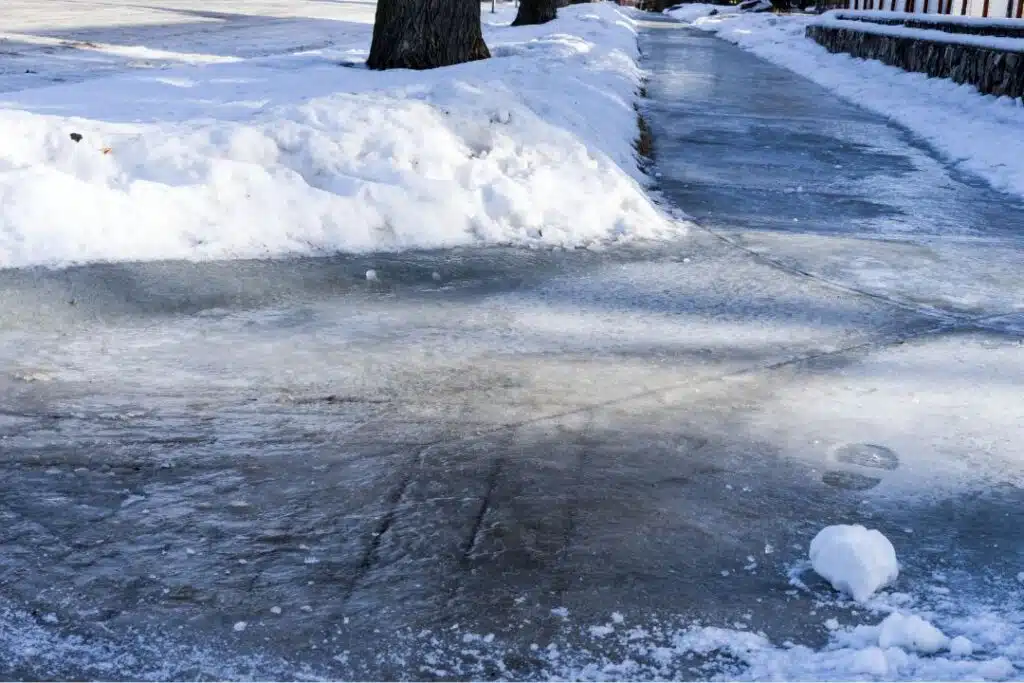
One factor that often strengthens premises liability icy sidewalk Colorado claims is melt-and-refreeze.
Durango’s winter weather regularly creates daytime melting followed by overnight freezing. This isn’t an unpredictable fluke—it’s a known pattern.
When property owners shovel snow but leave behind meltwater that refreezes into smooth ice, courts may view that as creating or exacerbating a dangerous condition rather than merely failing to remove snow.
This distinction matters because:
- It shows foreseeability
- It suggests the owner had time to address the hazard
- It undermines defenses based on “natural accumulation”
What About Warning Signs?
Warning signs can help—but they don’t automatically eliminate liability.
A small “Caution: Ice” sign doesn’t excuse a property owner from taking reasonable steps to fix the hazard. Warnings are most effective when:
- The danger is temporary
- Removal isn’t immediately possible
- The warning is clearly visible and specific
If an icy condition persists for days, a sign alone is often not enough.
Comparative Negligence: Can You Still Recover If You “Should Have Been Careful”?
Colorado follows a modified comparative negligence system.
That means:
- You can recover damages if you were less than 50% at fault
- Your compensation is reduced by your percentage of fault
Property owners often argue:
- You should have seen the ice
- You should have worn different shoes
- You should have avoided the area
Those arguments don’t automatically defeat a claim. The law recognizes that people must use walkways to enter buildings, go to work, or access services—even in winter.
The real question is whether the property owner’s failure outweighed any carelessness on the injured person’s part.
Real-World Scenario (Based on Common Claims, Not Fiction)
Consider a typical situation in La Plata County:
A tenant leaves for work early in the morning. The apartment complex shoveled snow days earlier but didn’t apply ice melt. Overnight temperatures dropped, turning residual moisture into a hard, slick layer of ice along the main walkway. No warning signs were posted.
The walkway is the only reasonable route to the parking lot.
The tenant slips, fractures a wrist, and misses several weeks of work.
This scenario raises important legal questions:
- Did the property owner know about recurring refreeze conditions?
- Was the hazard in a high-traffic, expected area?
- Were reasonable preventative measures available?
In many cases, this type of fact pattern supports liability.
Common Injuries from Ice-Related Slip-and-Falls
Slip-and-fall on ice injuries are often more serious than people expect, especially when falls happen suddenly and without time to brace.
Common injuries include:
- Wrist and arm fractures
- Hip fractures (especially in older adults)
- Knee ligament damage
- Herniated or bulging discs
- Shoulder injuries
- Concussions and traumatic brain injuries
These injuries don’t just involve medical bills. They affect mobility, independence, employment, and long-term quality of life.
What You Should Do After a Slip and Fall on Ice in Colorado
If you’re injured, your health comes first. But certain steps can protect your ability to pursue a claim later.
- Seek medical attention promptly
- Report the incident to the property owner or manager
- Document the scene if possible (photos of ice, lack of warnings, lighting)
- Get witness information if anyone saw the fall
- Avoid giving recorded statements without understanding your rights
These steps don’t guarantee a claim—but they help preserve facts that often disappear quickly once ice melts or conditions change.
Why These Laws Exist in the First Place
Premises liability law isn’t about punishing property owners for bad weather. It exists to encourage reasonable safety practices and prevent avoidable injuries.
Simple measures—timely shoveling, ice melt, drainage attention, inspections—dramatically reduce risk. When those steps are ignored, the burden often shifts unfairly to injured people who had no control over the hazard.
The law recognizes that imbalance.
When Legal Guidance Becomes Important
Not every icy fall leads to a valid claim. But when injuries are serious, recovery is long, or insurance companies deny responsibility, understanding your options matters.
Premises liability cases often hinge on details most people don’t think to document—maintenance schedules, weather patterns, prior complaints, or who had control over the area.
Learning where you stand doesn’t obligate you to take legal action. It simply helps you make informed decisions at a time when uncertainty is already high.
A Final Thought
A slip and fall on ice in Colorado isn’t just an unfortunate accident—it can be a life-altering event. Colorado law doesn’t expect perfection from property owners, but it does expect reasonable care, especially in places where people are invited and encouraged to walk.
If you’re dealing with injuries from an icy sidewalk or walkway and wondering whether anyone should be held responsible, taking time to understand your rights is a reasonable first step.
Often, clarity alone brings a sense of control back into a situation that felt anything but controlled.



0 Comments